

Drought-Tolerant Commercial Landscaping for DFW: Native Plants That Reduce Water Costs 40-60%
Published on February 15, 2026 by EDFX
Drought-Tolerant Commercial Landscaping for DFW: Native Plants That Reduce Water Costs 40-60%
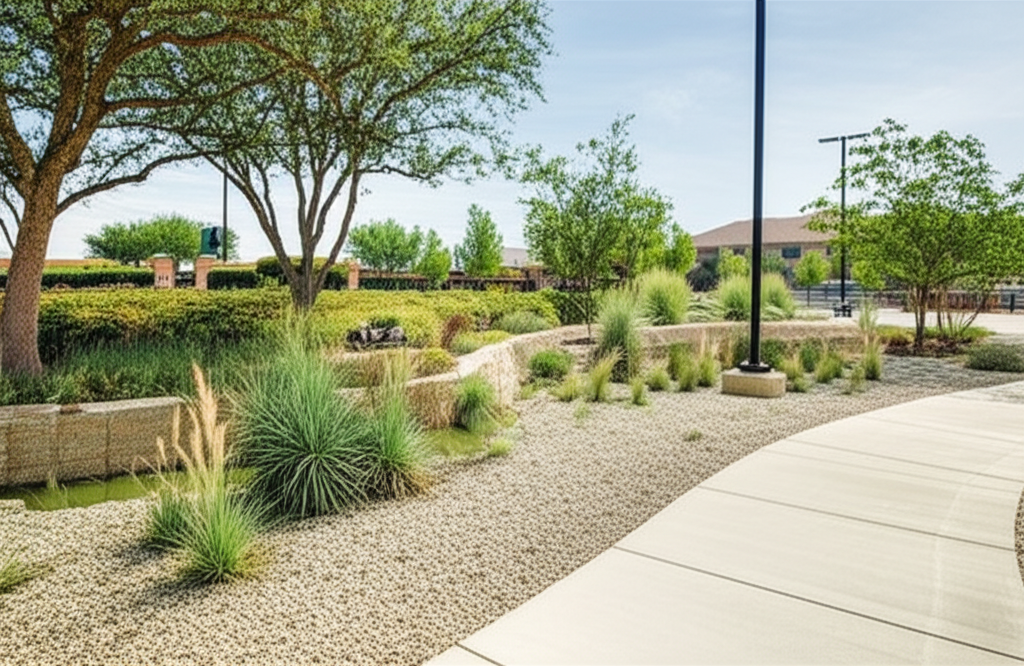
Texas native and adapted plants create commercial landscapes that thrive during drought restrictions while reducing water costs 40-60% and maintenance requirements 30%. For HOA communities and commercial properties facing escalating water costs and regulatory mandates, native landscaping is both financially prudent and legally compliant.
The Business Case for Native Commercial Landscaping
Native landscaping transforms water expenses from uncontrollable costs into competitive advantages.
Typical 10-acre commercial property water costs:
- Traditional turf landscape: $45,000-$65,000 annually
- Native/adapted landscape: $20,000-$35,000 annually
- Annual savings: $20,000-$30,000+
Additional benefits include:
- Reduced maintenance: Less frequent pruning, fewer replacements, lower labor
- Regulatory compliance: Natural compliance with drought restrictions
- Brand positioning: Sustainability messaging for environmentally conscious stakeholders
- Resilience: Survival through extreme weather that damages traditional landscapes
Recommended Native Plants for Commercial Sites
Ornamental Grasses
Gulf Muhly (Muhlenbergia capillaris): Pink fall plumes, 3-4 feet, extreme drought tolerance, stunning massed in large areas
Little Bluestem (Schizachyrium scoparium): Blue-green summer, copper winter, native prairie grass, 2-3 feet
Inland Sea Oats (Chasmanthium latifolium): Shade tolerant, distinctive seed heads, erosion control capability
Flowering Perennials
Texas Sage (Leucophyllum frutescens): Purple blooms after rain, silver foliage, 5-6 feet, requires no supplemental water once established
Turk's Cap (Malvaviscus arboreus): Red flowers, shade tolerant, attracts hummingbirds, 4-5 feet
Black-Eyed Susan (Rudbeckia hirta): Yellow summer blooms, pollinator support, reseeds naturally
Mexican Bush Sage (Salvia leucantha): Purple spikes, fall blooming, deer resistant
Evergreen Structure
Yaupon Holly (Ilex vomitoria): Evergreen screening, red berries, formal hedge capable, native alternative to non-native hollies
Texas Mountain Laurel (Sophora secundiflora): Fragrant purple blooms, specimen tree, slow growing
Design Principles for Commercial Native Landscapes
Hydrozoning
Group plants by water requirements for irrigation efficiency:
- Zone 1 (No irrigation): Established native grasses and perennials
- Zone 2 (Minimal): Low-water shrubs and trees
- Zone 3 (Moderate): Turf areas, seasonal color beds
Massing and Drifts
Native plants perform best and appear most intentional when massed:
- Plant in groups of 7+ for visual impact
- Create drifts of single species rather than scattered individuals
- Use repetition across large sites for cohesive appearance
Seasonal Interest Planning
Strategic plant selection ensures year-round appeal:
- Spring: Bluebonnets, Mexican feather grass emergence
- Summer: Texas sage blooms, sunflower varieties
- Fall: Gulf muhly plumes, autumn sage color
- Winter: Evergreen structure, ornamental grass forms, red yaupon berries
Implementation Strategy
Phased Conversion
Large-scale conversion requires strategic phasing:
- Phase 1: High-visibility areas (entrances, monuments) for immediate impact
- Phase 2: Common areas with highest water consumption
- Phase 3: Perimeter and buffer areas
- Phase 4: Remaining turf reduction and final optimization
Establishment Period Management
Native plants require 1-2 years establishment watering:
- First year: Regular irrigation to develop root systems
- Second year: Gradual reduction to minimal/no irrigation
- Long-term: Natural rainfall sufficiency
Maintenance Transition
Native landscapes require different maintenance approaches:
- Reduced mowing: Many areas converted from turf to naturalistic plantings
- Seasonal cutting back: Ornamental grasses and perennials require annual rejuvenation
- Minimal fertilization: Native plants adapted to local soil chemistry
- Integrated pest management: Native plants support beneficial insects reducing pest pressure
Conclusion
Drought-tolerant native landscaping delivers compelling financial returns while ensuring regulatory compliance and visual excellence. Sandoval Landscaping designs and installs commercial native landscapes throughout DFW, guiding properties through successful transitions.
Learn more about commercial landscaping: Commercial & HOA Compliance Guide
Categories: Foundation Protection