

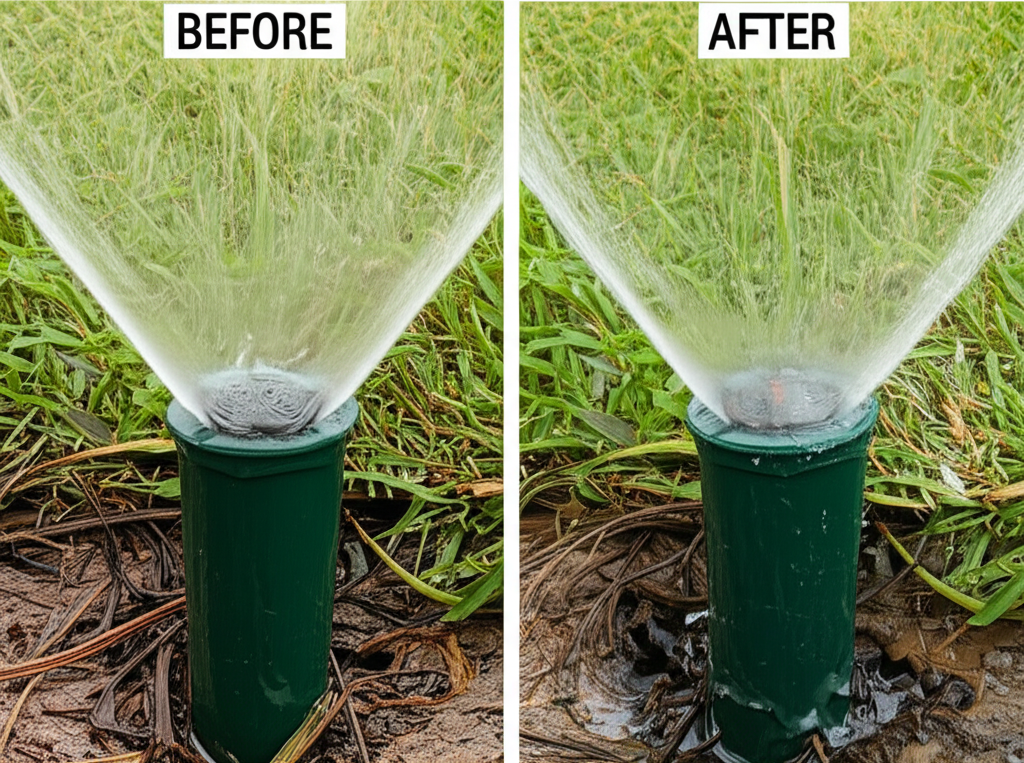
Fixing Low Head Drainage in Commercial Sprinklers: Stopping Water Waste & Soggy Spots
Published on February 15, 2026 by EDFX
Fixing Low Head Drainage in Commercial Sprinklers: Stopping Water Waste & Soggy Spots
Low head drainage wastes thousands of gallons annually while creating soggy spots and uneven irrigation coverage that damages turf and hardscapes. When irrigation zones shut off, water remaining in pipes drains through the lowest sprinkler heads, causing pure waste and potential liability issues.
Understanding Low Head Drainage
Low head drainage occurs when gravity pulls water from pipes through the lowest point in each zone after the system shuts off.
In commercial systems with elevation changes, this drainage represents significant water waste:
- Typical zone drainage: 5-15 gallons per event
- Multiplied by 10+ zones and daily watering
- Annual waste: 10,000-50,000+ gallons
Beyond water costs, low head drainage creates:
- Chronically soggy areas attracting pests and disease
- Hardscape staining and algae growth
- Slip-and-fall liability from wet surfaces
- Reduced pressure for remaining heads in zone
Identifying Low Head Drainage
Symptoms include:
- Water continuing to flow from certain heads 5-30 minutes after zone shuts off
- Consistently wet/soggy areas at specific locations
- Reduced performance from heads at end of zones
- Pressure loss during zone operation
- Visible water flowing from heads at lower elevations
Solutions for Low Head Drainage
Solution 1: Check Valve Installation
Check valves prevent backflow drainage by closing when water pressure drops.
Installation options:
- Head-mounted check valves: Built into or added to individual sprinkler heads ($5-$15 per head)
- Lateral line check valves: Installed in piping to protect entire zones
Best for: Retrofit situations where zone reconfiguration isn't feasible
Solution 2: Zone Reconfiguration
Separating high and low elevation areas into different zones eliminates drainage within zones.
This approach:
- Isolates elevation extremes
- Allows pressure optimization for each zone
- Prevents drainage entirely when zones are level
Best for: New installations or major renovations where plumbing changes are practical
Solution 3: Pressure Regulation
Proper pressure management reduces drainage volume.
Regulation strategies:
- Pressure regulation at valve or head level
- Proper zone design matching pressure to head requirements
- Flow control valves reducing drainage rate
Solution 4: Head Elevation Adjustment
Raising low heads to match surrounding grade prevents them from becoming drainage points.
Backflow Prevention and Drainage
Low head drainage can create backflow concerns when water drains from irrigation lines into the potable water supply. Texas regulations require backflow prevention devices on all irrigation systems:
- Atmospheric Vacuum Breaker (AVB): Must be 6+ inches above highest head
- Pressure Vacuum Breaker (PVB): Enhanced protection, must be above highest head
- Double Check Valve Assembly (DCVA): For high-hazard commercial applications
Proper backflow device selection and installation ensures drainage doesn't compromise water safety.
Commercial System Considerations
Commercial properties require additional drainage management considerations:
- Master valve and flow sensor integration: Shut off supply when unexpected flow detected
- Sloped parking lots and medians: Particular attention to low points
- Large zone drainage volumes: Commercial zones often have higher waste
- ADA compliance: Wet walkways create accessibility and liability issues
Cost-Benefit Analysis
Check valve retrofit investment:
- Cost: $50-$200 per zone (depending on head count)
- Annual water savings: $300-$800 (typical commercial system)
- Payback period: 3-8 months
Additional benefits:
- Improved distribution uniformity
- Reduced liability from wet surfaces
- Healthier turf (no oversaturated areas)
Conclusion
Low head drainage is fixable waste that improves system performance while reducing costs. Sandoval Landscaping diagnoses and corrects drainage issues in commercial systems throughout DFW.
Learn more about irrigation optimization: Smart Irrigation & Water Management Guide
Categories: Smart Irrigation